Infrared cutoff pigment
What is Infrared Cutoff Pigment?
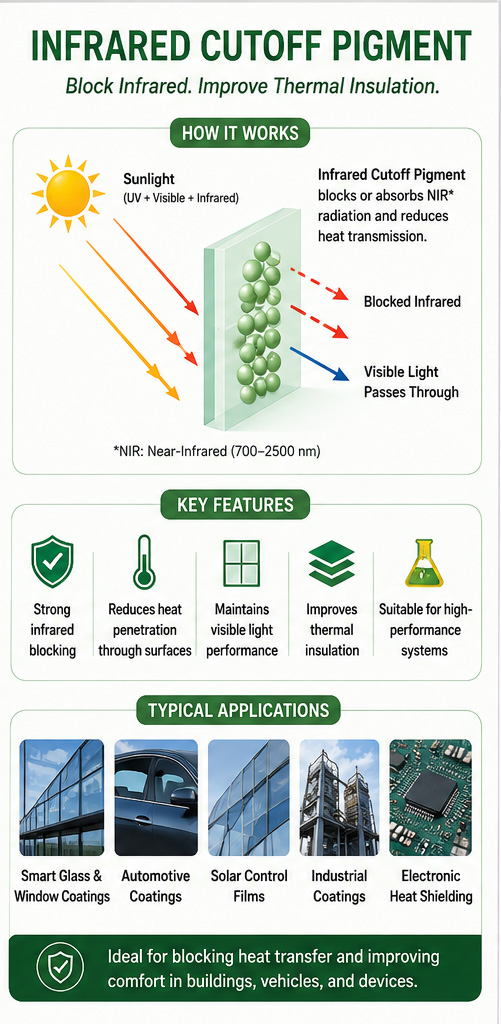
Infrared cutoff pigment is a functional pigment designed to block or significantly reduce the transmission of infrared radiation. It plays a critical role in controlling heat transfer and improving thermal insulation performance in coated or colored systems.
This type of pigment is often used where both visual appearance and thermal shielding are required.
Working Principle
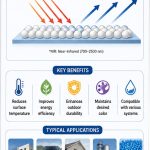
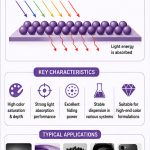
Infrared cutoff pigments function by absorbing or reflecting infrared wavelengths while maintaining controlled visible light performance. Unlike reflective pigments, cutoff pigments are more focused on blocking IR penetration rather than reflecting it outward.
Key Features
Strong infrared blocking capability
Helps prevent heat penetration through surfaces
Maintains stable visible color performance
Improves thermal insulation efficiency
Suitable for high-performance coating systems
අයදුම්පත්
Infrared cutoff pigments are commonly used in:
Smart window and glass coatings
Automotive interior and exterior coatings
Solar control films
High-end industrial protective coatings
Electronic device heat shielding materials
වාසි
Infrared cutoff pigments are ideal for systems requiring controlled heat management from outside to inside, especially in transparent or semi-transparent applications.
Frequently Asked Questions
Q1: What does infrared cutoff pigment do?
Infrared cutoff pigment blocks or reduces infrared radiation, helping to prevent heat from passing through coated surfaces.
Q2: How is infrared cutoff pigment different from reflective pigment?
Reflective pigments bounce infrared rays away, while cutoff pigments absorb or block them to reduce transmission through materials.
Q3: Where is infrared cutoff pigment commonly used?
It is used in smart glass, solar control films, automotive coatings, and heat-insulating industrial materials.
Q4: Can infrared cutoff pigments be used in transparent coatings?
Yes, they are often used in transparent or semi-transparent systems where heat control is needed without affecting visibility.
Q5: Does it affect visible light transmission?
It is mainly designed to control infrared light, so visible light can still pass through depending on formulation.
👉 Contact us to discuss your application requirements.
ආශ්රිත නිෂ්පාදන
 Infrared reflective pigment
- Infrared transmitting pigment
- Visible light absorbing pigment
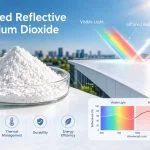
- Infrared Reflective Titanium Dioxide: Properties, Applications, and Buying Guide
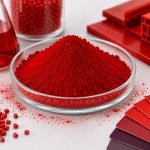
- Pigment Red 177 Buying Guide: Everything Importers Need to Know Before Purchasing
- What Is Pigment Red 177? Properties, Applications, and Benefits Explained
- How to Choose the Right Pigment Yellow 97 for Plastics, Coatings, and Inks
- Pigment Red 177 Technical Data: Heat Resistance, Light Fastness, and Chemical Stability
- Pigment Red 146: Properties, Applications, and Technical Guide
 වර්ණක රතු 146-කොරිමැක්ස් රතු FBB02